Half of Registered Clinical Trials Still Never Report Their Results
Registration was supposed to end selective publication. Two decades on, compliance with reporting requirements remains close to a coin flip, and enforcement is rare.

Trial registration was designed to solve a specific and well-documented fraud: running a study, disliking the result, and never publishing it. Registering a trial before it starts creates a public record that it existed, so an absent result becomes visible as an absence. The mechanism is sound and it has been mandatory in most major jurisdictions for years. Compliance with the reporting half of it remains roughly a coin flip.
The registry now documents the problem it was built to prevent, in considerable detail, and very little happens as a result.
What the requirement says and what happens
The obligation is not complicated. Register the trial with its primary outcome before enrolment, and post summary results to the registry within twelve months of completion. Publication in a journal is separate and additional; the registry posting is the floor.
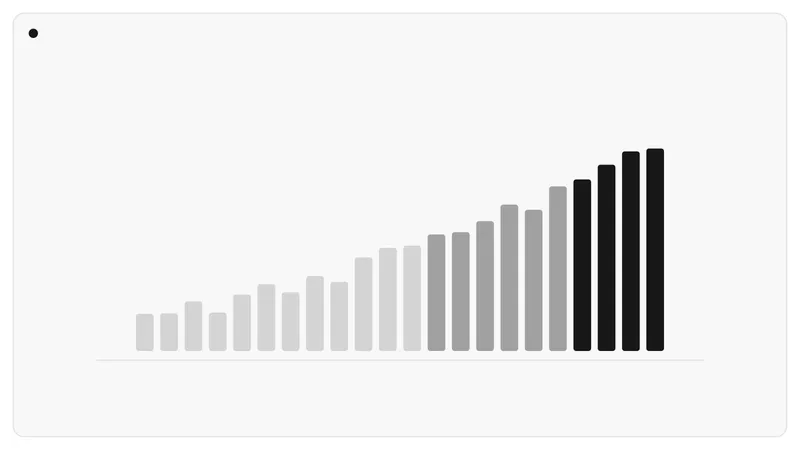
Audits across registries and jurisdictions keep landing in the same range. Roughly half of completed trials have results posted within the required window. A meaningful share never post at all. And a further category posts results that do not match the registered primary outcome, which is a different failure with the same effect.
- Non-reporting is not random. Trials with unfavourable or null results are less likely to be reported, which is precisely the bias registration was meant to remove.
- Academic sponsors perform worse than industry in most audits, which surprises people who assume the incentive problem is purely commercial.
- Outcome switching is under-measured because detecting it requires comparing the registered protocol against the published paper, which almost no one does routinely.
The registry entry said the primary outcome was mortality at ninety days. The paper reported a composite endpoint that included hospital readmission. Both documents are public. Nobody had compared them in four years.
Why the evidence base is distorted, quantitatively
The consequence is not abstract. Meta-analyses and clinical guidelines are built from published trials. If unfavourable results are systematically missing, pooled estimates of treatment effect are biased upward, and the direction of the bias is known even when its magnitude is not.
Analyses that have recovered unpublished data through regulatory submissions or litigation have repeatedly found smaller effects than the published literature indicated, and in several well-known cases harms that the published record did not reflect. Each of those recoveries required a specific investigation. There is no routine mechanism for it.
Enforcement exists on paper
The relevant statutes and regulations do provide for penalties, including substantial daily fines in some jurisdictions. Enforcement actions are exceptionally rare relative to documented non-compliance.
The reasons regulators give are consistent: limited staffing, ambiguity about which entity is the responsible party for multi-site academic trials, and definitional questions about completion dates that make the twelve-month clock arguable. Those are real administrative obstacles. They are also the kind of obstacles that get resolved when there is institutional will, and the pattern suggests there is not much.
What has demonstrably worked is public tracking. Independent audits that publish sponsor-level compliance rates by name have produced measurable improvements at named institutions, on a timescale of months. Reputational pressure has outperformed statutory penalty in this domain by a wide margin, largely because it is actually applied.
What would fix it
Three changes would address most of the gap, and none require new legislation.
Tie funding and ethics approval to prior reporting compliance. An institution seeking approval for a new trial should demonstrate that its completed trials have posted results. This makes the sanction automatic and administrative rather than dependent on enforcement discretion.
Require registries to flag outcome discrepancies mechanically. Comparing a registered primary outcome against a reported one is a structured data problem, and doing it automatically would make outcome switching visible without anyone having to investigate.
Publish sponsor-level compliance as a standing metric rather than as periodic studies. The evidence that this works already exists.
The underlying pattern generalises beyond medicine. As we reported on the validation gap in protein design, any field where negative results go unrecorded will systematically overestimate how well its methods work.
Published . Corrections and clarifications: our policy.